In the early 2000s, supply chain management was treated as a back-office function in Indian business discourse — not a strategic boardroom concern. Infrastructure bottlenecks, fragmented logistics networks, and the absence of any credible industry data meant that executives lacked the tools to benchmark, plan, or invest with confidence. ETIG recognised the gap before the market articulated it: India's manufacturing and distribution competitiveness would ultimately be decided not on the factory floor but in the supply chain. The decision to build a sustained research program on SCM — starting in 2002 — positioned ETIG as the reference source for a subject that would only grow in strategic urgency.
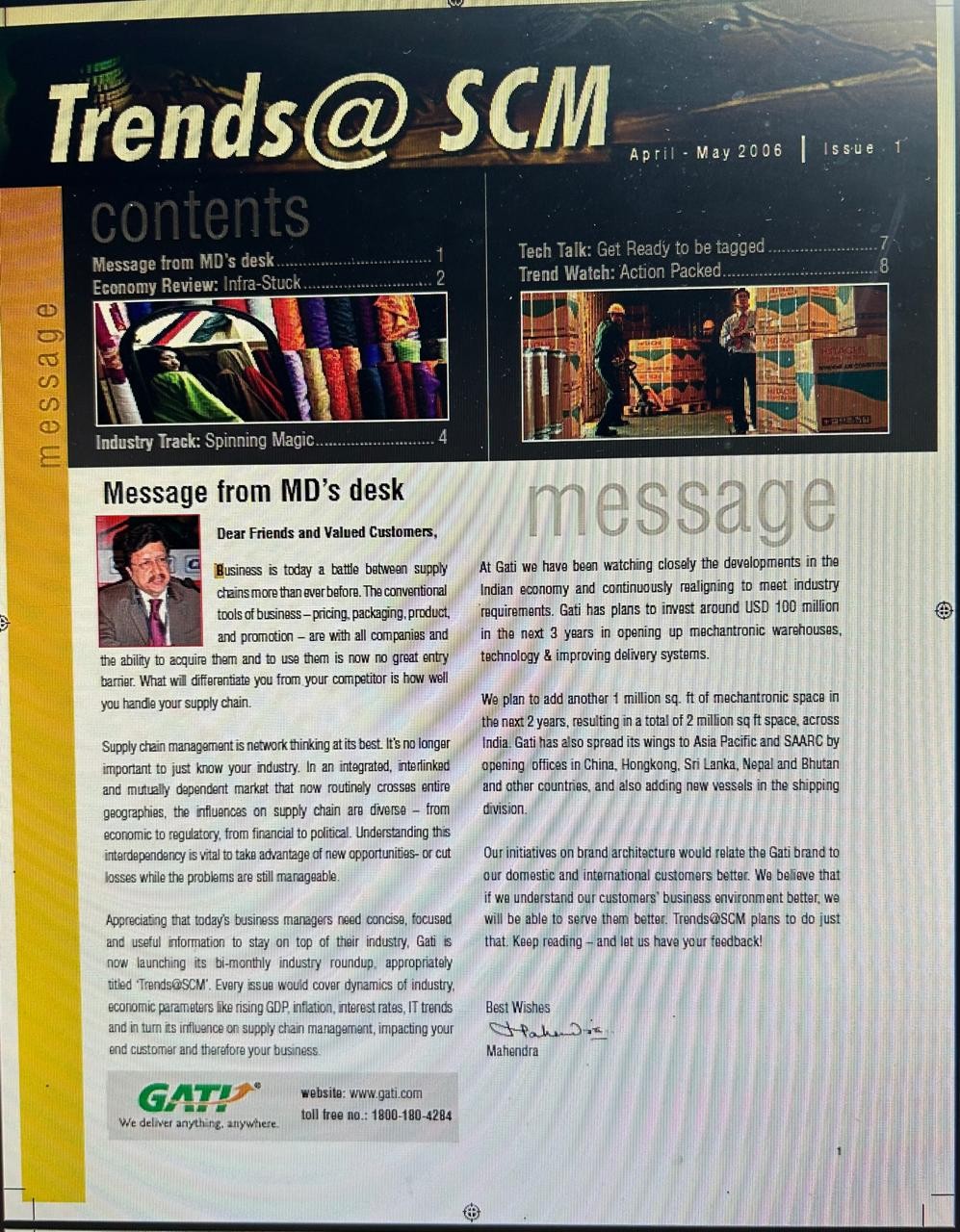 Trends@SCM Gati Issue 1 2006
 Tourism in India
 Doing It Right
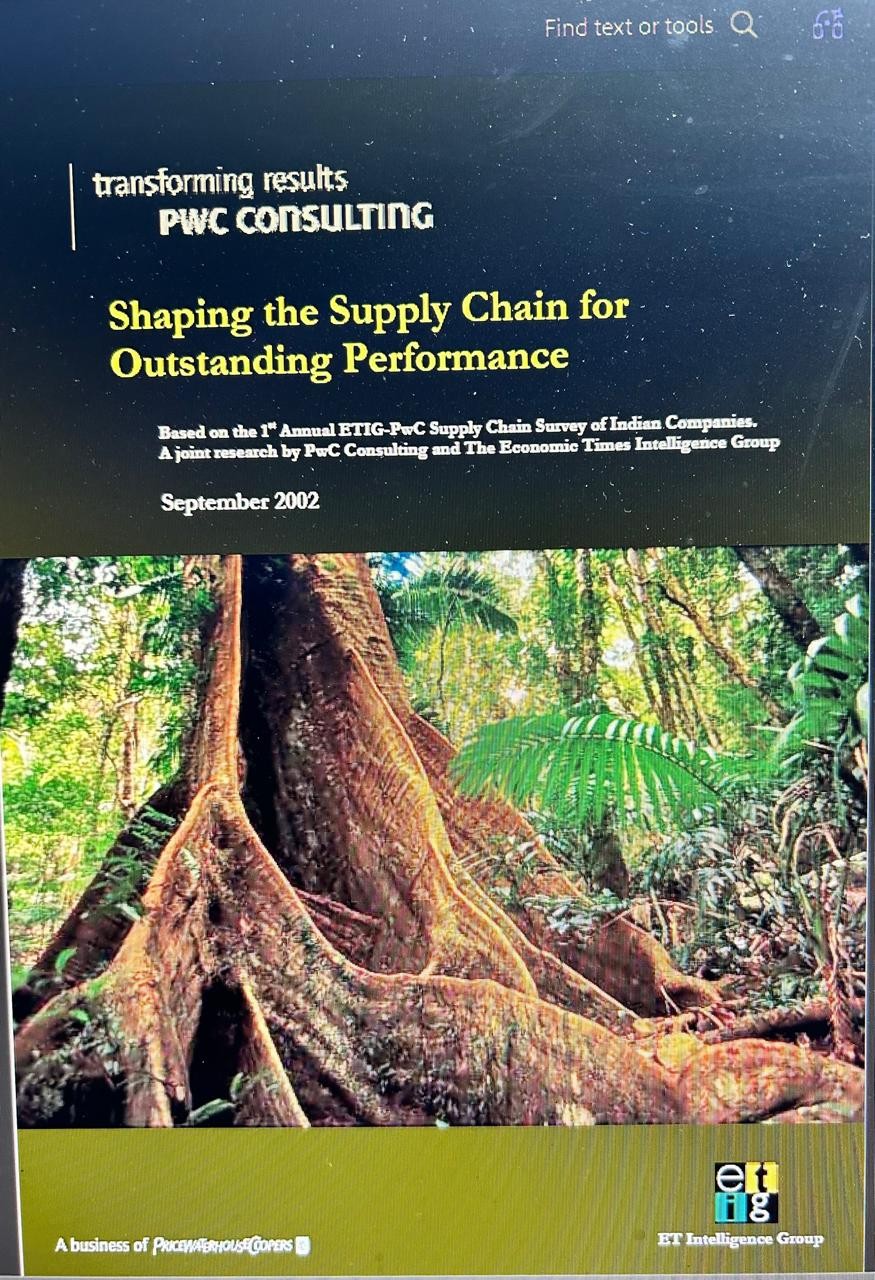 Supply Chain Study
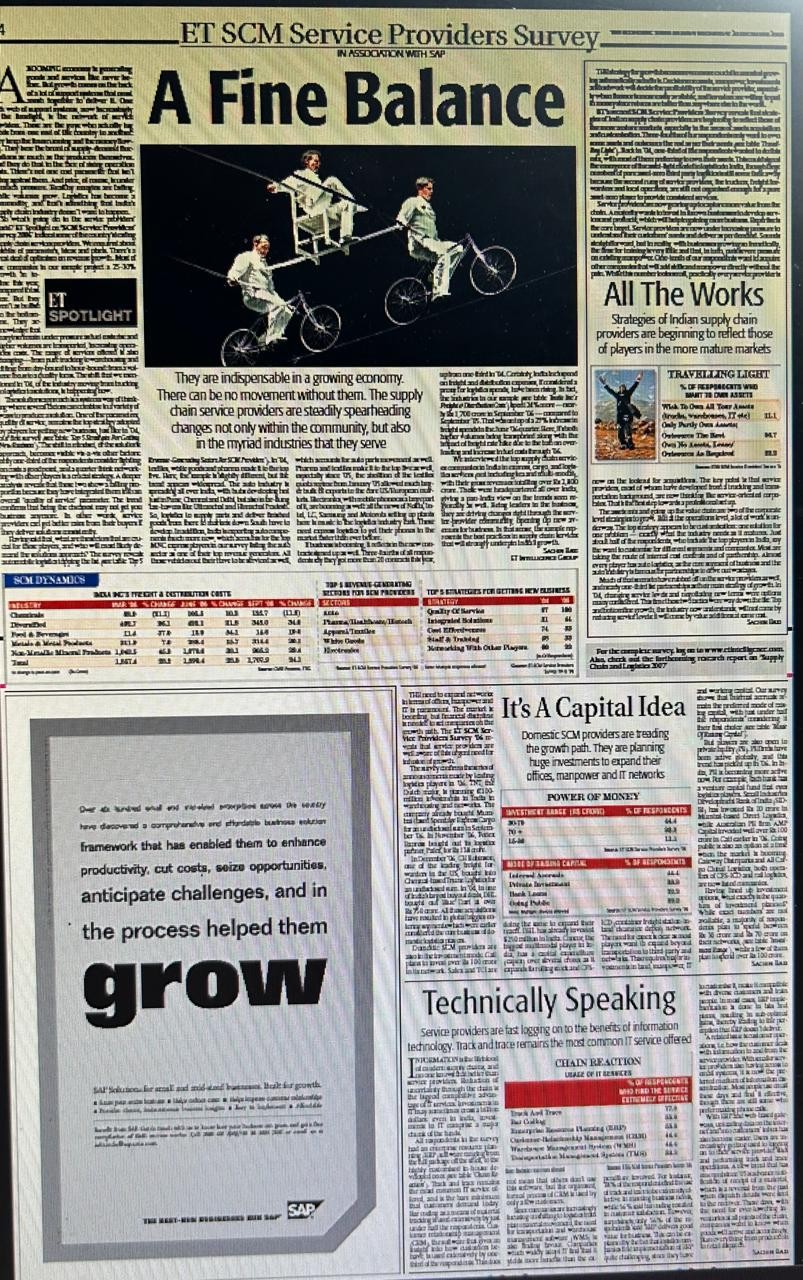 ET SCM Service Providers Survey
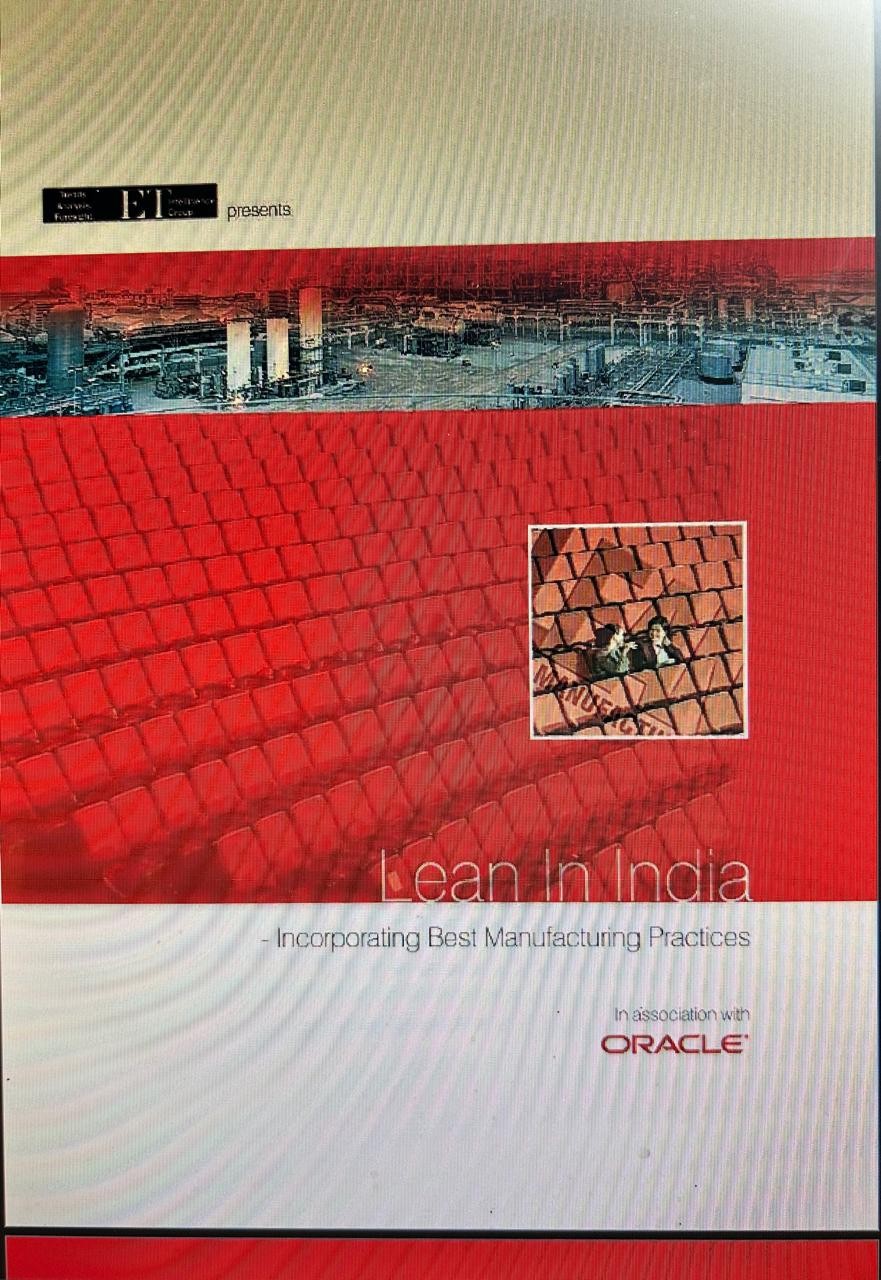 Oracle-ETIG Lean Manufacturing Study
- No existing data infrastructure on Indian logistics — every benchmark had to be built from scratch through primary research.
- Low survey-response culture in industry required sustained relationship-building with senior operations leaders to generate credible, usable data.
- Research had to serve two distinct readerships simultaneously: logistics users (manufacturers, shippers) and service providers — each with different intelligence needs.
- Identifying adjacent topics early — lean manufacturing, logistics technology — and commissioning research before industry demand was visible required conviction without guarantee of commercial return.
- Monetising niche B2B research through sponsorships demanded positioning ETIG as a neutral authority, not an advertiser's mouthpiece.
- Designed and executed three editions of an annual SCM survey (2002, 2005, 2007), creating India's first recurring, independent logistics benchmark series — structured to capture both sides of the market: users and service providers.
- Secured PwC Consulting as co-publication partner on the first edition, establishing the research's analytical credibility from the outset and enabling entry into senior industry audiences.
- Monetised each successive report through strategic sponsorships — Gati and Safexpress — aligning sponsor brand authority with credible, independent research; not advertorial content.
- Identified the shift from logistics-as-operations to logistics-as-technology early: researched telemetry, vehicle tracking, and load-matching platforms Before Uber — well ahead of the on-demand freight wave that followed.
- Extended research scope into lean manufacturing and best-practice production, co-published with Oracle — pre-dating industry-wide interest in operational excellence and manufacturing competitiveness.
- Conducted field research at UPS global headquarters (Atlanta) and WorldPort (Louisville, Kentucky), securing an exclusive interview with the UPS Chairman for publication in The Economic Times — bringing global logistics intelligence to an Indian readership.
- Converted fieldwork into a digital revenue event: UPS became the inaugural sponsor of the Supply Chain section on ETIntelligence.com, establishing a digital monetisation model for specialist research content.
- Translated research into practitioner engagement: presented insights as a speaker at an IIMM (Institute of Materials Management) national event in Pune, building professional network and institutional reach.
- Established ETIG as the primary independent publisher of supply chain intelligence in India — a first-mover position that attracted repeat enterprise sponsorship across successive editions.
- Each research cycle opened new commercial and editorial territory: from freight benchmarking to manufacturing best practices to logistics technology — building an expanding research franchise from a single starting point.
- Research on load-matching and logistics technology predated mainstream market formation in on-demand freight by several years, demonstrating consistent early identification of structural shifts.
- The UPS partnership converted international field access into both editorial exclusivity and the first digital sponsorship of ETIG's SCM vertical — linking reporting capability directly to revenue generation.
- Delivered sustained coverage that shaped industry conversation on supply chain competitiveness at a time when the subject had no established media home in India.
The most defensible position in business journalism is not speed — it is early relevance. Identifying a subject before the market knows it needs coverage, building the research infrastructure to own it, and then monetising that ownership as demand rises: that is the editorial equivalent of entering a market before the competition arrives. Supply chain, lean manufacturing, and logistics technology were all identified and published on before they became mainstream mandates — validating that foresight, backed by rigorous research, is a commercial strategy in itself.